23 junio 2026
World Press Photo 2026 llega al Franz Mayer
El Museo Franz Mayer recibe World Press Photo 2026 junto con El Archivo, una muestra histórica que cruza fotoperiodismo, memoria visual y presente.
Una mirada al fotoperiodismo global en el Franz Mayer
World Press Photo 2026 llega al Museo Franz Mayer con una edición que desborda el formato de exposición anual para convertirse en una lectura del presente. Del 24 de junio al 4 de octubre, el recinto presenta una edición doble que celebra los 40 años del museo y los 70 años de la Fundación World Press Photo, a través de dos recorridos que se miran entre sí: las imágenes ganadoras de 2026 y una selección histórica proveniente de archivo.

La imagen como testigo
Cada año, World Press Photo recuerda que la fotografía documental no solo registra acontecimientos: también construye memoria pública. En esta edición, la muestra reúne 144 imágenes seleccionadas entre más de 57 mil fotografías realizadas por 3 mil 747 fotógrafos de 141 países. El resultado es un mapa visual atravesado por conflictos armados, migración, derechos humanos, crisis climática, identidad, comunidad y resistencia.
La Fotografía del Año es Separated by ICE, de Carol Guzy, realizada para ZUMA Press, iWitness y Miami Herald. La imagen muestra a una niña aferrada a su padre mientras agentes de ICE lo detienen después de una audiencia migratoria en Nueva York. La escena condensa una de las funciones más poderosas del fotoperiodismo: hacer visible aquello que ocurre en los márgenes de los discursos oficiales, ahí donde una decisión política transforma una vida familiar en fractura.
Guzy, una de las fotoperiodistas más reconocidas de su generación, ha construido una trayectoria marcada por la cobertura de crisis humanitarias, conflictos y desplazamientos. Su fotografía ganadora no busca distancia: obliga a mirar el instante en que una política pública se vuelve cuerpo, llanto y pérdida.
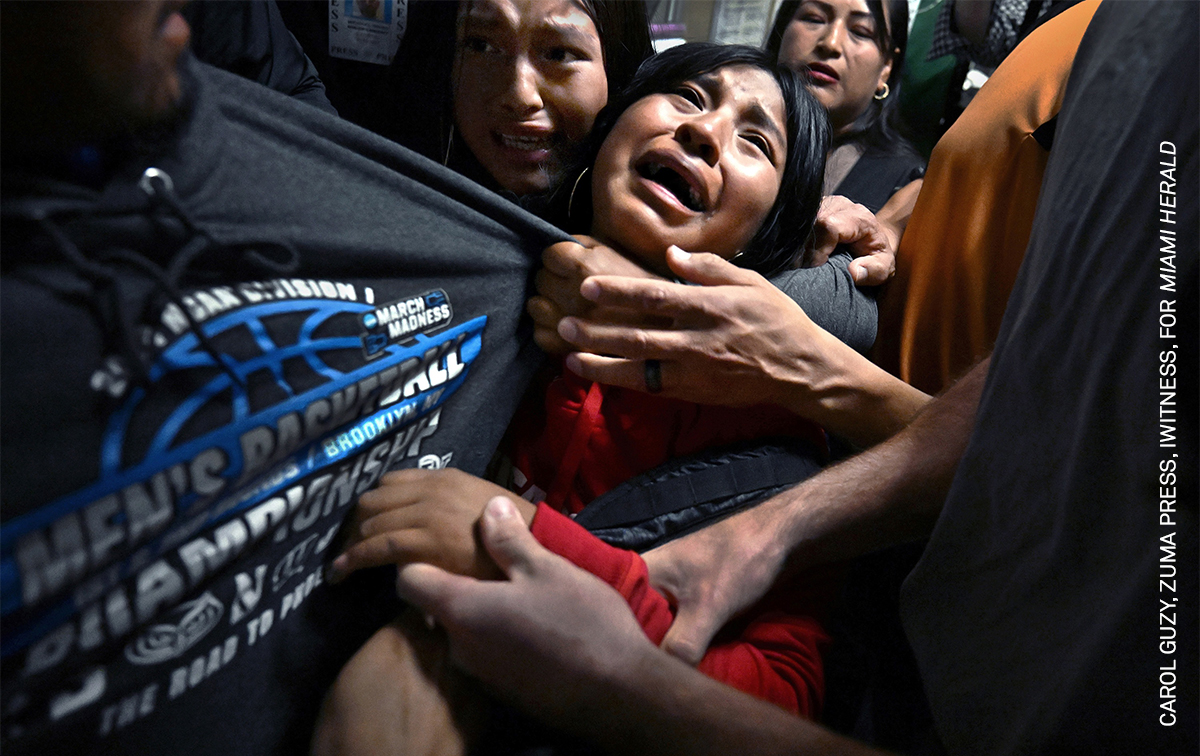
Separated by ICE
Carol Guzy
ZUMA Press, iWitness, for Miami Herald
El Archivo: mirar hacia atrás para leer el presente
La exposición se acompaña de World Press Photo: El Archivo, una muestra creada especialmente para el Museo Franz Mayer. Integrada por 33 fotografías históricas originales, provenientes de los Archivos Nacionales de los Países Bajos y de los acervos de la Fundación World Press Photo, la selección recorre imágenes premiadas desde 1959.
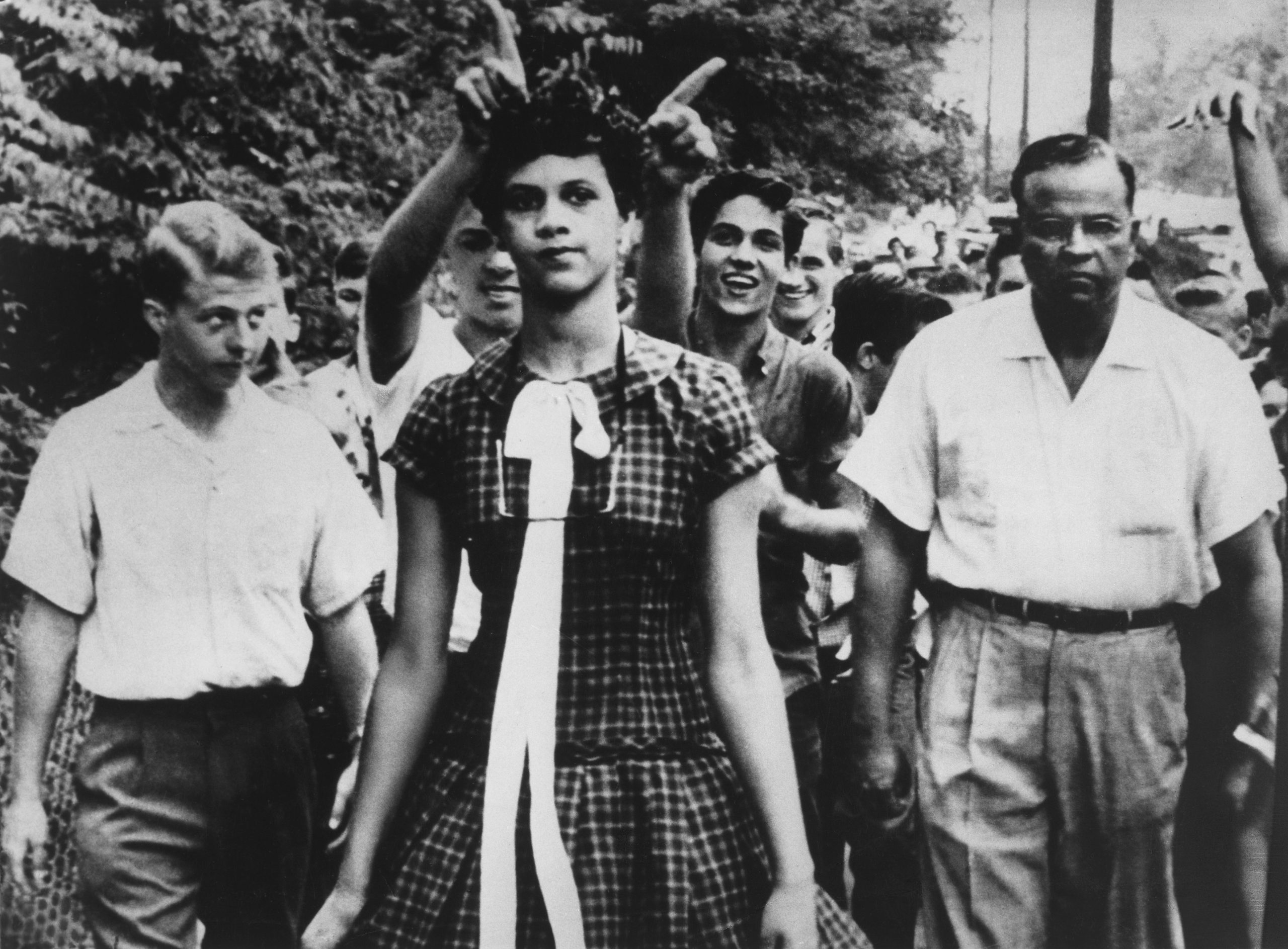
Este archivo permite observar cómo ciertas fotografías han dado forma a la memoria colectiva: protestas, guerras, luchas por derechos civiles, movimientos sociales y momentos de tensión política que siguen resonando décadas después. En diálogo con la edición 2026, el archivo no aparece como una revisión nostálgica, sino como una herramienta crítica para entender cómo se han narrado las crisis del mundo y qué imágenes permanecen cuando los acontecimientos dejan de ser noticia.
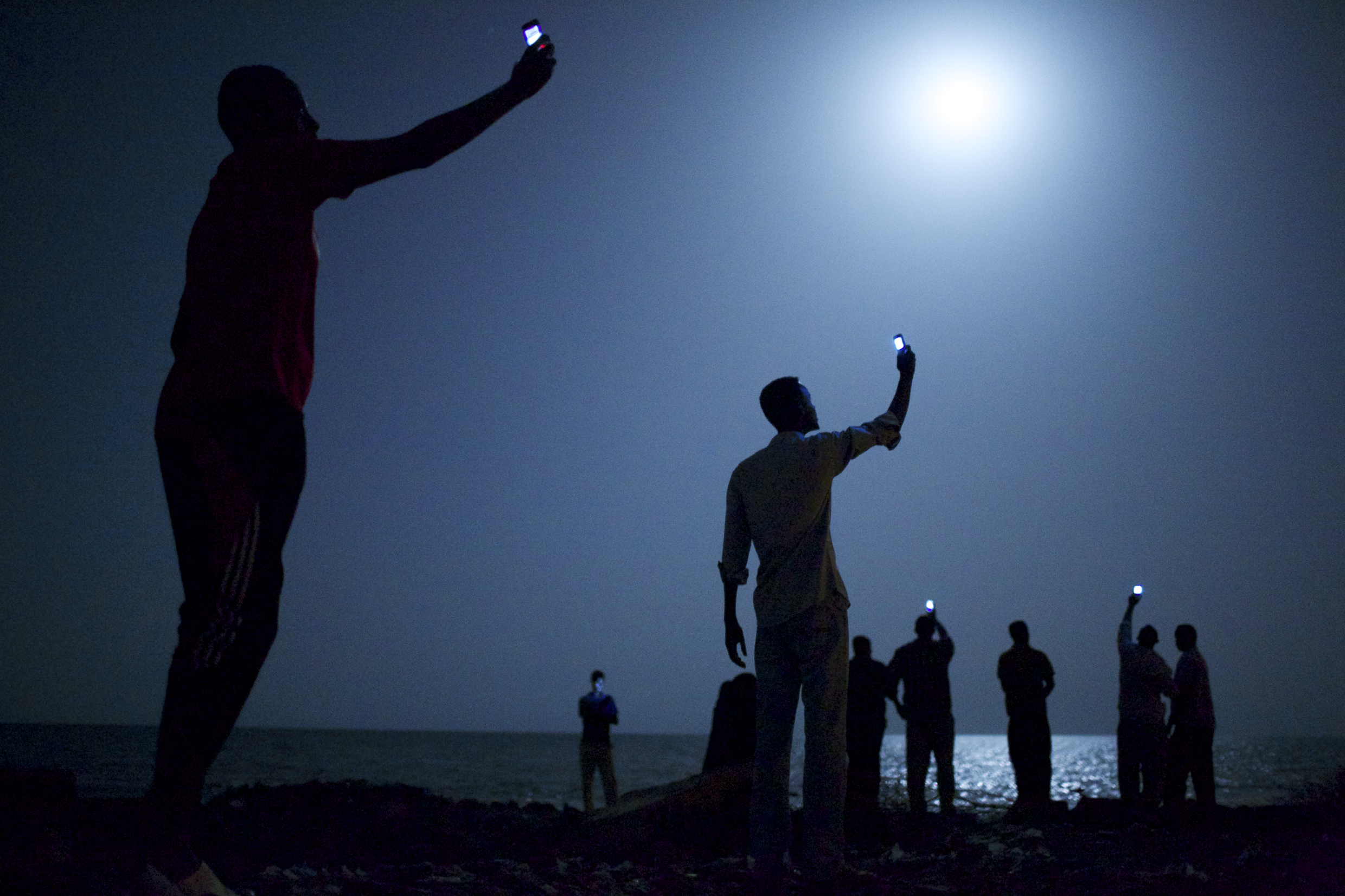
Impoverished African migrants crowd the night shore of Djibouti city, trying to capture inexpensive cell signals from neighboring Somalia—a tenuous link to relatives abroad. For more than 60,000 years our species has been relying on such intimate social connections to spread across the Earth.
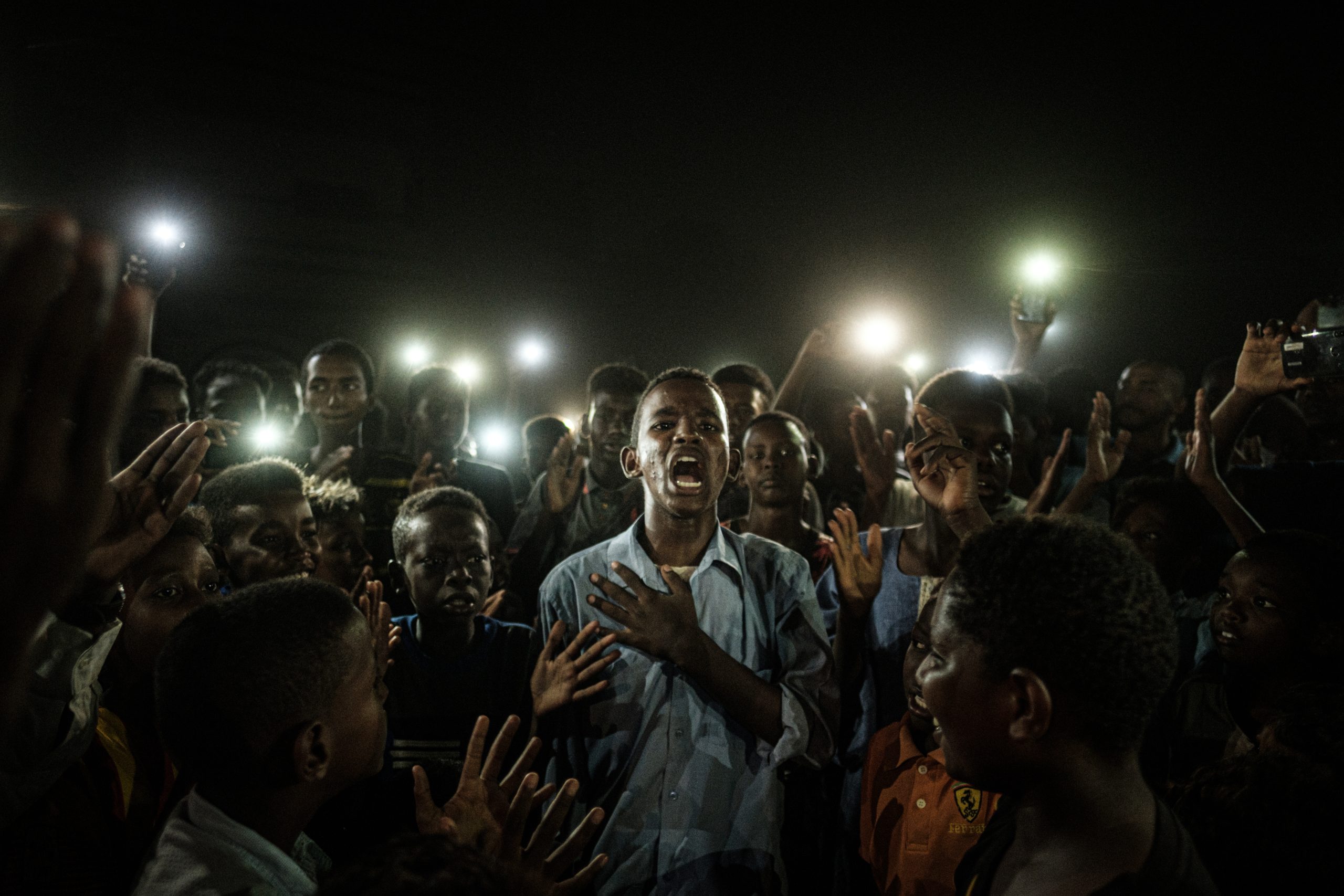
People chant slogans as a young man recites a poem, illuminated by mobile phones, before the opposition's direct dialog with people in Khartoum on June 19, 2019. - People chanted slogans including "revolution" and "civil" as the young man recited a poem about revolution. (Photo by Yasuyoshi CHIBA / AFP)
César Rodríguez y un país bajo transformación climática
Uno de los puntos más relevantes de la edición es la presencia del fotógrafo mexicano César Rodríguez, ganador en la categoría de proyectos a largo plazo en la región Norte y Centroamérica por México, un clima cambiante. Su serie documenta los efectos de la crisis climática en distintas regiones del país, desde la erosión de las costas de Tabasco y Veracruz hasta la escasez de agua en Monterrey y las inundaciones en el Estado de México.
El proyecto tiene la fuerza de una investigación visual desarrollada a lo largo del tiempo. Rodríguez no presenta el cambio climático como una abstracción científica ni como una amenaza futura, sino como una experiencia cotidiana que modifica paisajes, economías, vínculos y formas de permanencia. En sus imágenes, el agua que falta, el mar que avanza y la tierra que cede hablan de comunidades expuestas a una transformación que ya está ocurriendo.
Title: Mexico, A Changing Climate Credit: © César Rodríguez, Norwegian Red Cross, SNCA, The New York Times Caption: Antonio Mayoral and Guadalupe Cobos pose for a portrait at their home. They are among the last residents of El Bosque. More than 60 families have already relocated inland, losing access to the sea and their traditional fishing livelihoods. El Bosque, Tabasco, Mexico, 13 December 2024. Story: Mexico is especially vulnerable to climate extremes, with 52% of its territory situated in arid or semi-arid zones. Over the last two decades, environmental disasters have internally displaced approximately 2.7 million people, a figure projected to reach up to 8 million by 2050. This project documents the enormous cost of these changes on a human scale: from the rapid erosion of Tabasco’s coastlines, where sea levels are rising three times faster than the global average, to the systemic water scarcities in Monterrey and the State of Mexico, where renewable water availability has plummeted by 81% since 1950.
Title: Mexico, A Changing Climate Credit: © César Rodríguez, Norwegian Red Cross, SNCA, The New York Times Caption: A dog wanders the vanishing coastline of Las Barrancas. Fishermen and families who depend on the ocean struggle to survive; many are forced to relocate. Veracruz, Mexico, 10 March 2025. Story: Mexico is especially vulnerable to climate extremes, with 52% of its territory situated in arid or semi-arid zones. Over the last two decades, environmental disasters have internally displaced approximately 2.7 million people, a figure projected to reach up to 8 million by 2050. This project documents the enormous cost of these changes on a human scale: from the rapid erosion of Tabasco’s coastlines, where sea levels are rising three times faster than the global average, to the systemic water scarcities in Monterrey and the State of Mexico, where renewable water availability has plummeted by 81% since 1950.
Title: Mexico, A Changing Climate Credit: © César Rodríguez, Norwegian Red Cross, SNCA, The New York Times Caption: Enrique, a local fisherman, stands before his home. Marine warming and habitat degradation have forced fishing communities to travel significantly further offshore as traditional species migrate north to cooler waters. Las Barrancas, Veracruz, Mexico, 10 March 2025. Story: Mexico is especially vulnerable to climate extremes, with 52% of its territory situated in arid or semi-arid zones. Over the last two decades, environmental disasters have internally displaced approximately 2.7 million people, a figure projected to reach up to 8 million by 2050. This project documents the enormous cost of these changes on a human scale: from the rapid erosion of Tabasco’s coastlines, where sea levels are rising three times faster than the global average, to the systemic water scarcities in Monterrey and the State of Mexico, where renewable water availability has plummeted by 81% since 1950.
Title: Mexico, A Changing Climate Credit: © César Rodríguez, Norwegian Red Cross, SNCA, The New York Times Caption: A portion of Enrique’s catch. Fishing is becoming increasingly difficult in the area as beaches erode and changing conditions in the sea drive fish species elsewhere, transforming the marine ecosystem of the Gulf of Mexico. Las Barrancas, Veracruz, Mexico, 12 March 2025. Story: Mexico is especially vulnerable to climate extremes, with 52% of its territory situated in arid or semi-arid zones. Over the last two decades, environmental disasters have internally displaced approximately 2.7 million people, a figure projected to reach up to 8 million by 2050. This project documents the enormous cost of these changes on a human scale: from the rapid erosion of Tabasco’s coastlines, where sea levels are rising three times faster than the global average, to the systemic water scarcities in Monterrey and the State of Mexico, where renewable water availability has plummeted by 81% since 1950.
Title: Mexico, A Changing Climate Credit: © César Rodríguez, Norwegian Red Cross, SNCA, The New York Times Caption: A tourist boat sits grounded after the La Boca dam dropped to 8.5% capacity during the 2022 drought. Monterrey remains caught between extreme water scarcity and catastrophic, climate-driven flooding. Santiago, Nuevo Leon, Mexico, 20 June 2022. Story: Mexico is especially vulnerable to climate extremes, with 52% of its territory situated in arid or semi-arid zones. Over the last two decades, environmental disasters have internally displaced approximately 2.7 million people, a figure projected to reach up to 8 million by 2050. This project documents the enormous cost of these changes on a human scale: from the rapid erosion of Tabasco’s coastlines, where sea levels are rising three times faster than the global average, to the systemic water scarcities in Monterrey and the State of Mexico, where renewable water availability has plummeted by 81% since 1950.
Title: Mexico, A Changing Climate Credit: © César Rodríguez, Norwegian Red Cross, SNCA, The New York Times Caption: Residents in Monterrey line up for water. Some blocked streets to demand water service. In response, large trucks delivered water daily to the city’s most vulnerable neighborhoods. Nuevo Leon, Mexico, 21 June 2022. Story: Mexico is especially vulnerable to climate extremes, with 52% of its territory situated in arid or semi-arid zones. Over the last two decades, environmental disasters have internally displaced approximately 2.7 million people, a figure projected to reach up to 8 million by 2050. This project documents the enormous cost of these changes on a human scale: from the rapid erosion of Tabasco’s coastlines, where sea levels are rising three times faster than the global average, to the systemic water scarcities in Monterrey and the State of Mexico, where renewable water availability has plummeted by 81% since 1950.
Title: Mexico, A Changing Climate Credit: © César Rodríguez, Norwegian Red Cross, SNCA, The New York Times Caption: A child runs up to the second floor of a partially submerged home. The 2024 floods affected 7,000 residents. Many families lost personal belongings like photographs and other cherished items. Chalco, State of Mexico, Mexico, 19 August 2024. Story: Mexico is especially vulnerable to climate extremes, with 52% of its territory situated in arid or semi-arid zones. Over the last two decades, environmental disasters have internally displaced approximately 2.7 million people, a figure projected to reach up to 8 million by 2050. This project documents the enormous cost of these changes on a human scale: from the rapid erosion of Tabasco’s coastlines, where sea levels are rising three times faster than the global average, to the systemic water scarcities in Monterrey and the State of Mexico, where renewable water availability has plummeted by 81% since 1950.
Title: Mexico, A Changing Climate Credit: © César Rodríguez, Norwegian Red Cross, SNCA, The New York Times Caption: A forest fire burns on Cerro de San Juan. Fueled by drought, the fires consumed over 950 hectares, threatening the biodiversity of the Nayarit highlands. Tepic, Mexico, 17 April 2023. Story: Mexico is especially vulnerable to climate extremes, with 52% of its territory situated in arid or semi-arid zones. Over the last two decades, environmental disasters have internally displaced approximately 2.7 million people, a figure projected to reach up to 8 million by 2050. This project documents the enormous cost of these changes on a human scale: from the rapid erosion of Tabasco’s coastlines, where sea levels are rising three times faster than the global average, to the systemic water scarcities in Monterrey and the State of Mexico, where renewable water availability has plummeted by 81% since 1950.
Fotografías para entender lo que permanece
Así, World Press Photo 2026 en el Franz Mayer no solo reúne fotografías excepcionales: propone una lectura crítica sobre el modo en que las imágenes participan en la construcción de la memoria colectiva. Frente a un presente marcado por desplazamientos, crisis climática, conflictos armados y tensiones sociales, la exposición permite reconocer el valor de la fotografía documental como testimonio, pero también como una forma de permanencia.
Cada imagen abre una pregunta sobre aquello que decidimos mirar y aquello que, muchas veces, queda fuera del relato público. En diálogo con El Archivo, la edición 2026 muestra que el fotoperiodismo no pertenece únicamente al instante de la noticia; su fuerza aparece con el tiempo, cuando una imagen vuelve a ser vista y adquiere nuevas capas de sentido. La muestra invita a pensar qué fotografías sobreviven al acontecimiento, cuáles se integran a la historia visual de una época y qué imágenes necesitamos conservar para comprender el mundo que estamos habitando.

Design Films
Edición 89 | Visionarias del espacio